Doesn’t shopping for baby shampoo feel surprisingly overwhelming?
You grab a bottle with a cute baby on the front (they always get you with that adorable baby picture).
Or you search “baby shampoo” on Amazon, scroll through the reviews, and pick one with thousands of five-star ratings.
But does that mean it’s the best choice for your baby?
That’s where I got stuck.
I wanted something gentle, with ingredients I could feel good about.
But between “clean,” “natural,” and “non-toxic” claims – plus all these ingredient names no one can even pronounce – I wasn’t sure what actually mattered.
I just want to wash my baby – why did it feel like homework?
Wait, is it even an essential for baby? Can I just wash my baby with water?
So I dug into the research, looked up ingredients (yes, the ones I couldn’t pronounce) and history, and learned what actually makes a good baby shampoo.
Somewhere along the way, I felt like I was earning a PhD in baby bath time. All because I wanted a shampoo that would gently clean my baby’s hair, care for her delicate skin, and be easy to use – with ingredients I felt comfortable choosing, and answers for my bath time questions.
Here’s the shortlist to help you spend less time comparing bottles and more time enjoying those sweet, freshly washed baby snuggles.
Best baby shampoos at a glance:
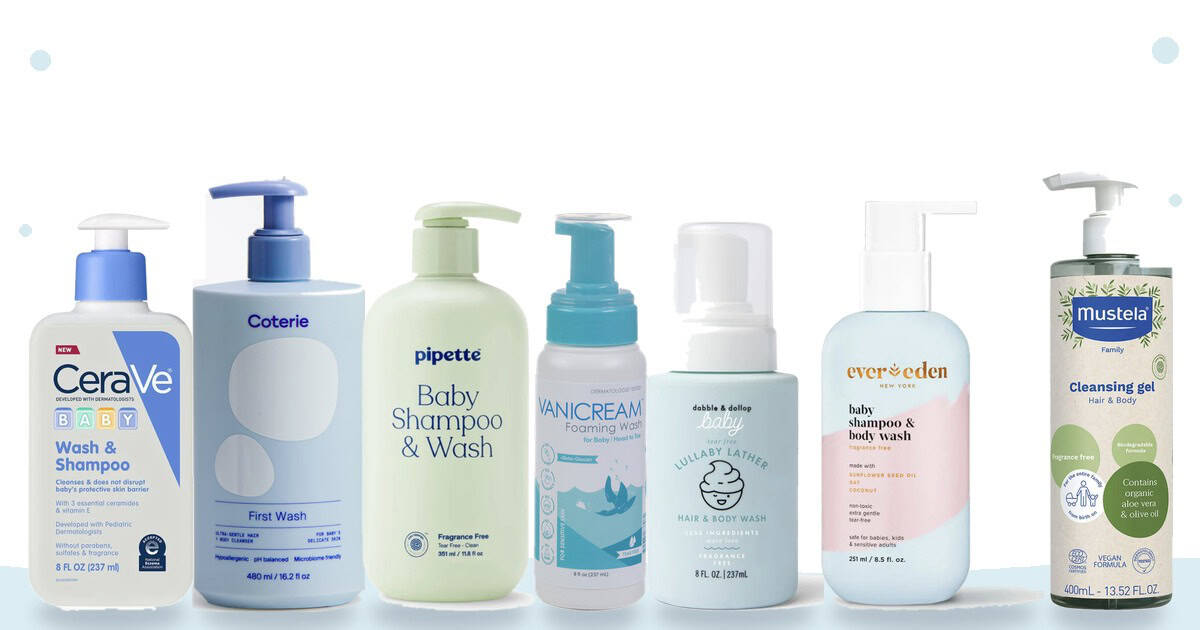
Short answer: My top picks are CeraVe Baby Wash & Shampoo for eczema-prone skin, Coterie The First Wash for the cleanest ingredient list, and Pipette Fragrance Free for the best value. Every bottle on this list is sulfate-free, fragrance-free and built on gentle cleansers.
Here’s the fun part! I flipped over a lot of bottles for this one. Every pick passed our three label checks: no sulfates, no fragrance and a short ingredient list. Then I looked at what each one adds to nourish your baby’s skin, read what real parents had to say, and did the price-per-ounce math so you don’t have to.
Quick note: prices and ratings are as of October 2026 and can change, so double-check before you buy.
At a Glance: Best Baby Shampoos Compared
| Baby Shampoo | Best For | Price ($) | Size (fl oz) | Price per oz ($) | |
|---|---|---|---|---|---|
| 1 | CeraVe Baby Wash & Shampoo | Eczema-prone and dry skin | $9.99 | 8.0 | $1.25 |
| 2 | Coterie The First Wash | Cleanest ingredient list | $40.00 | 16.2 | $2.47 |
| 3 | Pipette Baby Shampoo + Wash, Fragrance Free | Best value | $9.39 | 11.8 | $0.80 |
| 4 | Vanicream Foaming Wash for Baby | Super-sensitive skin | $9.99 | 8.0 | $1.25 |
| 5 | Dabble & Dollop Lullaby Lather | Award-winning newcomer | $13.99 | 8.0 | $1.75 |
| 6 | Evereden Baby Shampoo & Body Wash, Fragrance Free | Splurge-worthy hydration | $20.00 | 8.5 | $2.35 |
| 7 | Mustela Organic Cleansing Gel | Certified organic | $20.50 | 13.5 | $1.52 |
My Favorite baby shampoos:
Amy Baby’s Quick Picks
- Baby has eczema? Start with CeraVe or Vanicream.
- Want the cleanest label? Go for Coterie The First Wash.
- On a budget? Pipette Fragrance Free is your match.
- Love organic? Reach for Mustela Organic.
And remember, no shampoo is perfect for every baby. If a rash keeps showing up along the hairline, eyelids or neck, check in with your pediatrician instead of trying brand after brand. Sometimes a dermatologist can pinpoint exactly which ingredient is the troublemaker.
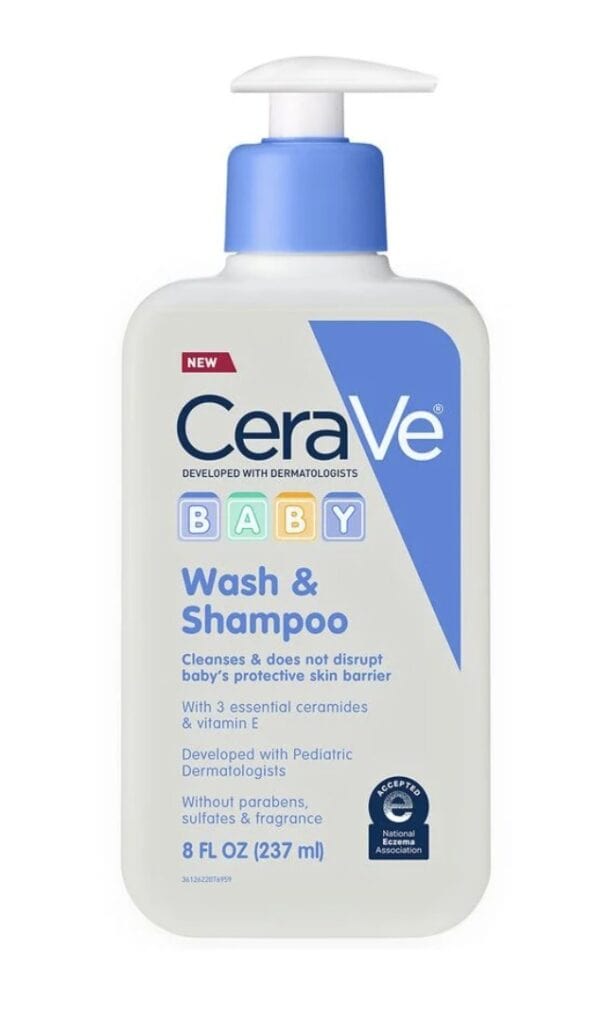
1. CeraVe Baby Wash & Shampoo: Best Baby Shampoo for Eczema-Prone Skin
Best for: Babies with eczema, dry patches or skin that seems to react to everything
Why it made the list
If I could only pick one bottle for a baby with touchy skin, this would be it. CeraVe adds three ceramides, cholesterol and hyaluronic acid. Those sound fancy, but they’re actually the same building blocks your baby’s skin barrier is made of. So it doesn’t just clean; it helps protect, too.
- Carries the National Eczema Association Seal of Acceptance
- Cleans with gentle coconut-based cleansers (coco-betaine and glutamates), not cocamidopropyl betaine
- No fragrance, no PEGs, no phenoxyethanol
- The baby shampoo editors recommend most, with about 4.7 stars from thousands of ratings
What to watch for
- It’s thin and watery, so it can go fast
- A few parents found it slightly drying on super-dry skin
- Some parents mention pumps that stop working
Price:
About $9.99 a bottle. That’s drugstore-friendly for a dermatologist brand.
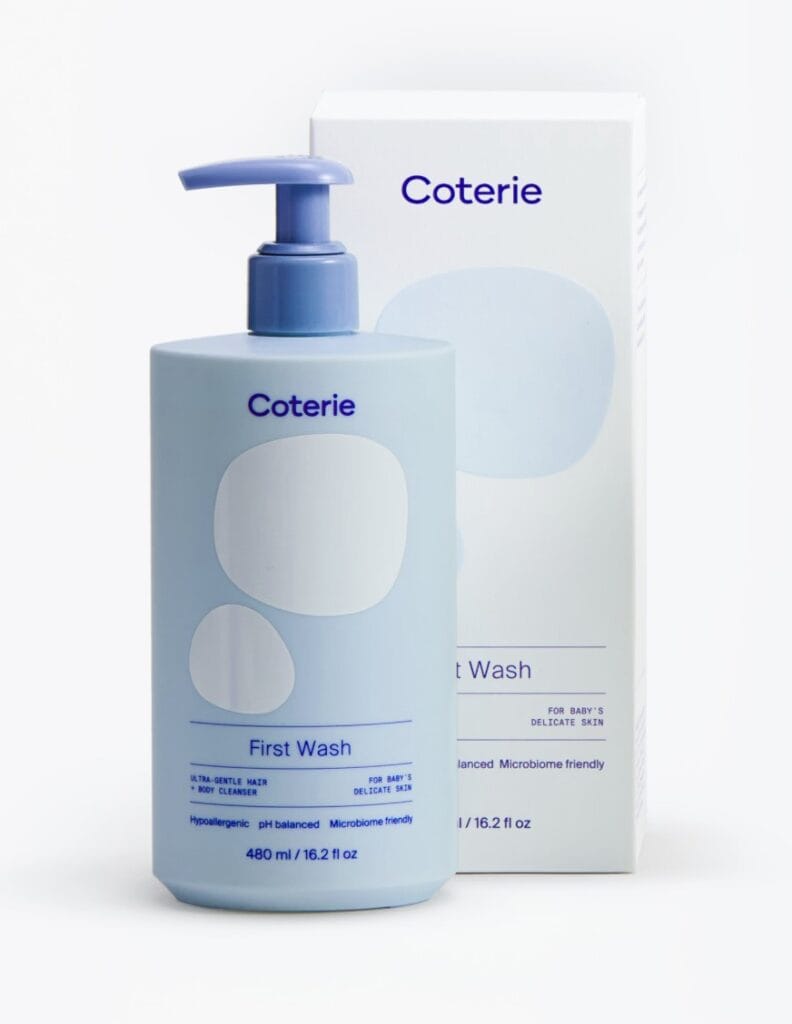
2. Coterie The First Wash: Best Clean Ingredient List
Best for: Parents who want the cleanest label and real moisture, and don’t mind paying for it
Why it made the list
Point blank: this ingredient list is gorgeous. It’s made entirely of gentle cleansers from our cheat sheet (decyl glucoside, coco-glucoside and sodium lauroyl lactylate), plus a bunch of good stuff to keep skin soft:
- Glycerin to pull in moisture
- Panthenol (vitamin B5) to soothe and soften
- Marshmallow root extract, a calming plant extract (and no, it’s not the candy)
- National Eczema Association Seal and EWG Verified, a rare double win
- No fragrance, essential oils, phenoxyethanol or cocamidopropyl betaine
Parents rave that it leaves skin soft and helps with eczema. It’s rated 4.4 stars from 88 reviews on Babylist.
What to watch for
- That price tag! It’s the priciest pick on the list per ounce
- A handful of parents found it drying, and a few mentioned eye stinging or an odd smell
Price:
$40 for 16.2 oz, about $2.47 per ounce.
The bright side: one or two pumps cleans hair to toes, and Coterie says a bottle lasts about two to three months.
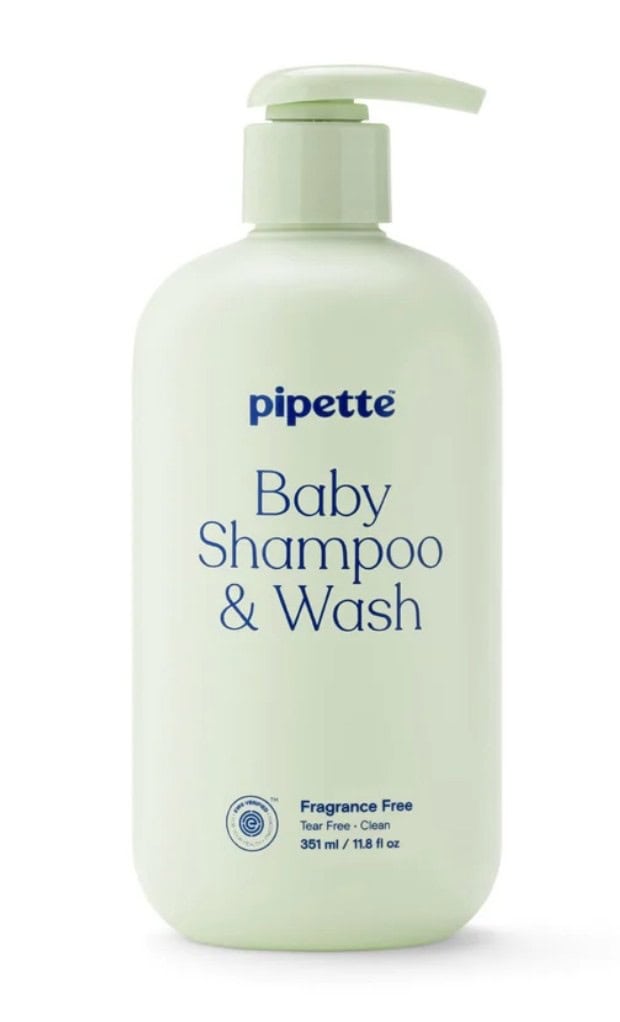
3. Pipette Baby Shampoo + Wash, Fragrance Free: Best Value Baby Shampoo
Best for: Parents who want a clean formula without the splurge
Why it made the list
This is the one I’d tell my best friend to grab. It has just 13 ingredients and nothing from our watch list:
- Gentle sugar-and-coconut cleansers (decyl glucoside and coco-glucoside)
- Squalane, a lightweight oil that works like skin’s natural oils, plus glycerin for moisture
- EWG Verified and Leaping Bunny certified (no animal testing)
- 4.57 stars from over 2,300 Target reviews, the biggest review pile among the top picks
What to watch for
- Make sure you grab the Fragrance Free bottle, because Pipette makes scented versions, too. And I don’t like their smell! It’s too strong for me! I only used it once, never again. The smell stayed on my babies for days!
- A few parents reported rashes or dryness, and one mentioned eye stinging
- Thin texture, and the pump can be awkward one-handed
Price:
$9.39 for 11.8 oz, about $0.80 per ounce. Best bang for your buck on the list.
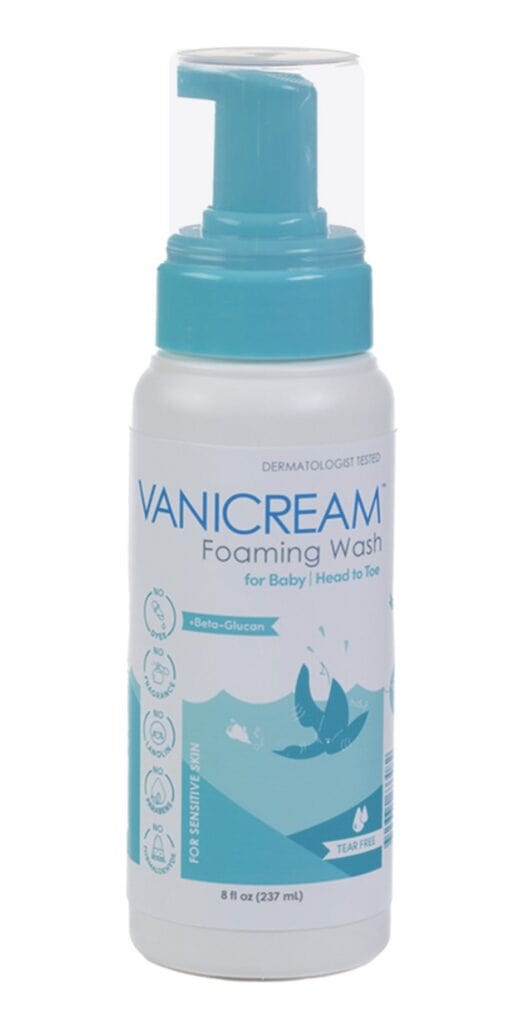
4. Vanicream Foaming Wash for Baby: Best for Super-Sensitive Skin
Best for: Babies who react to everything
Why it made the list
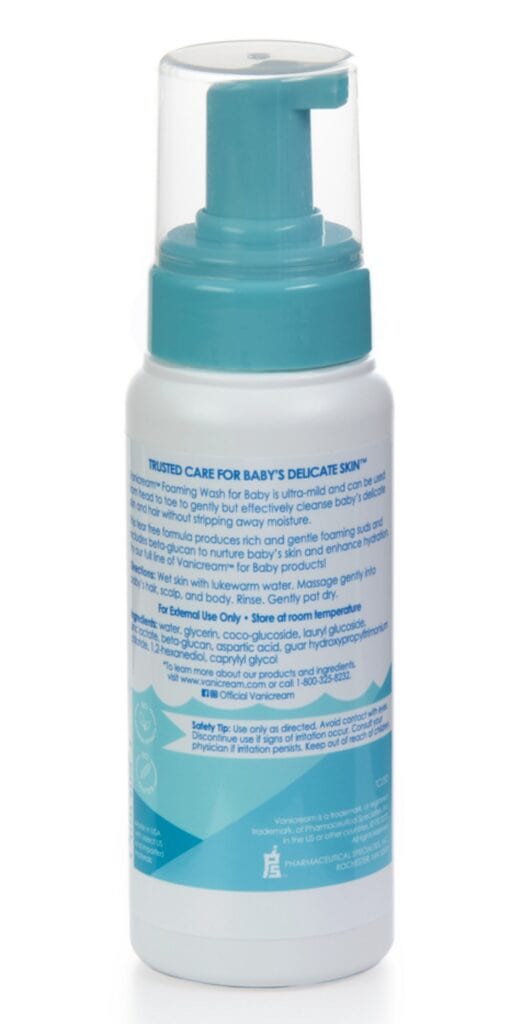
Vanicream has the shortest, simplest list I found, about 10 ingredients total. I’ve also used Vanicream Lotion which was recommended by our pediatrician for my boy’s eczema. It’s a great brand with the shortest clean ingredients for sensitive baby skins.
- Cleans with only gentle glucosides
- Glycerin and beta-glucan (a soothing moisturizer from oats) for softness
- No fragrance, no cocamidopropyl betaine, no PEGs, no botanicals
- Foams right out of the pump, which is so handy with a squirmy baby in one arm
- 4.69 stars from Target reviewers, with parents praising how gentle it is on eczema
What to watch for
- Not super sudsy, so you may use a bit more
- Less moisturizing than CeraVe or Coterie
- One parent found it left hair a little greasy
Price:
$9.99 for 8 oz, about $1.25 per ounce.
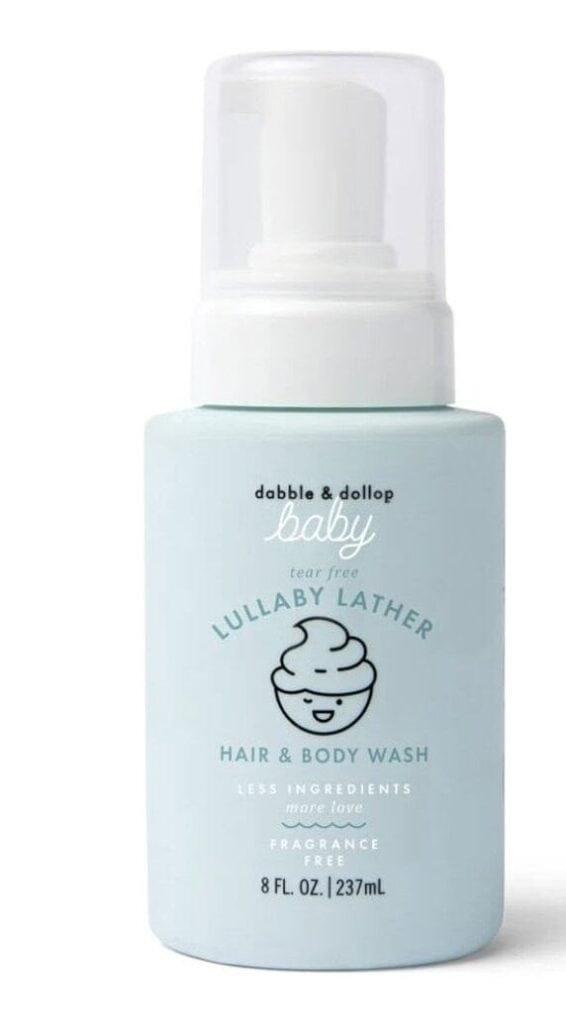
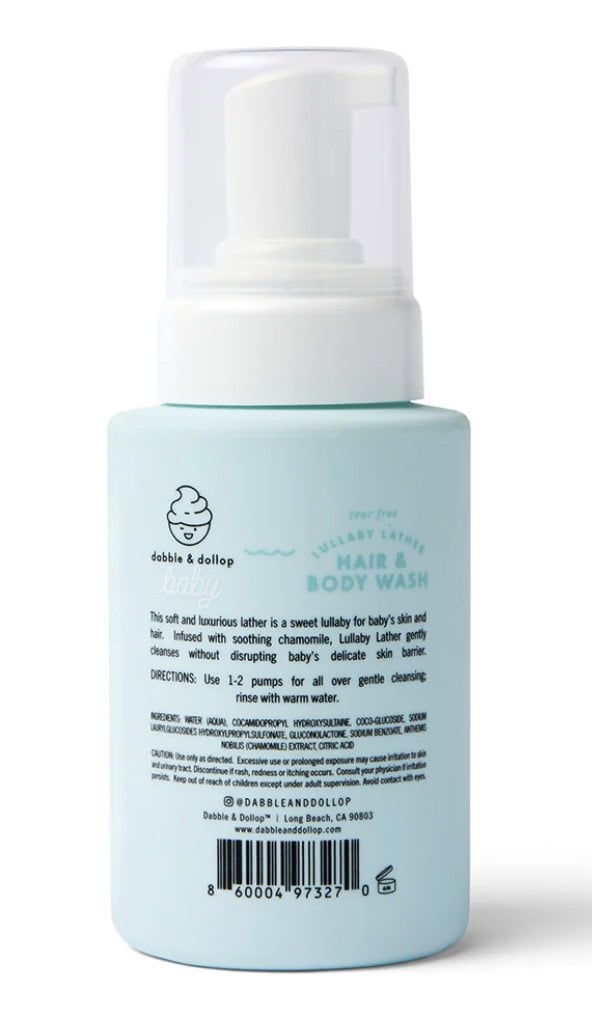
5. Dabble & Dollop Lullaby Lather Hair & Body Wash: Best Award-Winning Newcomer
Best for: Parents who love a fun bath brand but want a truly gentle formula
Why it made the list
Dabble & Dollop is known for its scented, bubbly bath products. But Lullaby Lather is their baby formula, and it’s a totally different story:
- Fragrance-free, with just 8 ingredients
- pH 5.5, close to skin’s natural pH
- EWG Verified and labeled safe from newborn on
- Gentle cleansers, including coco-glucoside and a sugar-based cleanser. (Psst: “sodium laurylglucosides hydroxypropylsulfonate” looks scary, but it is not SLS!)
- Named a 2026 Good Housekeeping Parenting Award winner
What to watch for
- It contains chamomile extract and cocamidopropyl hydroxysultaine, two ingredients worth watching if your baby has eczema
- It’s lighter on moisturizers than the top picks
- It’s new, so there aren’t many reviews yet
Price:
$13.99 for 8 oz, about $1.75 per ounce.
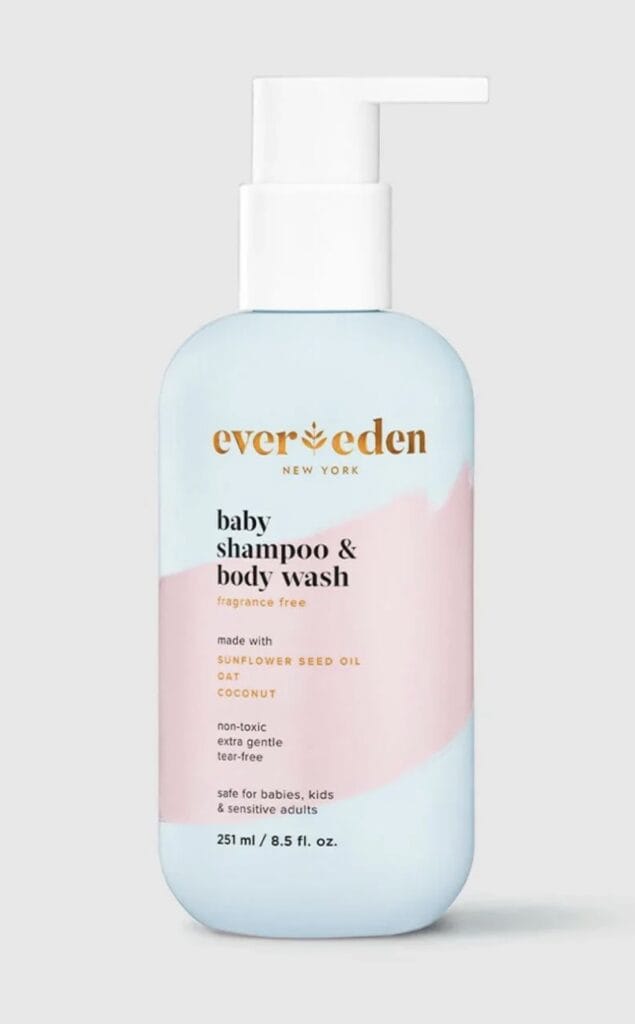
6. Evereden Baby Shampoo & Body Wash, Fragrance Free: Best Splurge for Hydration
Best for: Dry skin, and parents who want a little luxe
Why it made the list
Evereden adds plant oils and oat to keep skin soft. It skips fragrance and cocamidopropyl betaine, which a lot of “clean” brands still use. It’s EWG Verified. I used it when my son had eczema. It didn’t help with his eczema, but I love the hydration and the nice, creamy lather.
What to watch for
- Pricey for the size
- Its 4.85-star rating comes from about 200 reviews on Evereden’s own website, so take it with a grain of salt
- Contains oat, so skip it if your baby has an oat allergy
Price:
$20 for 8.5 oz, about $2.35 per ounce.
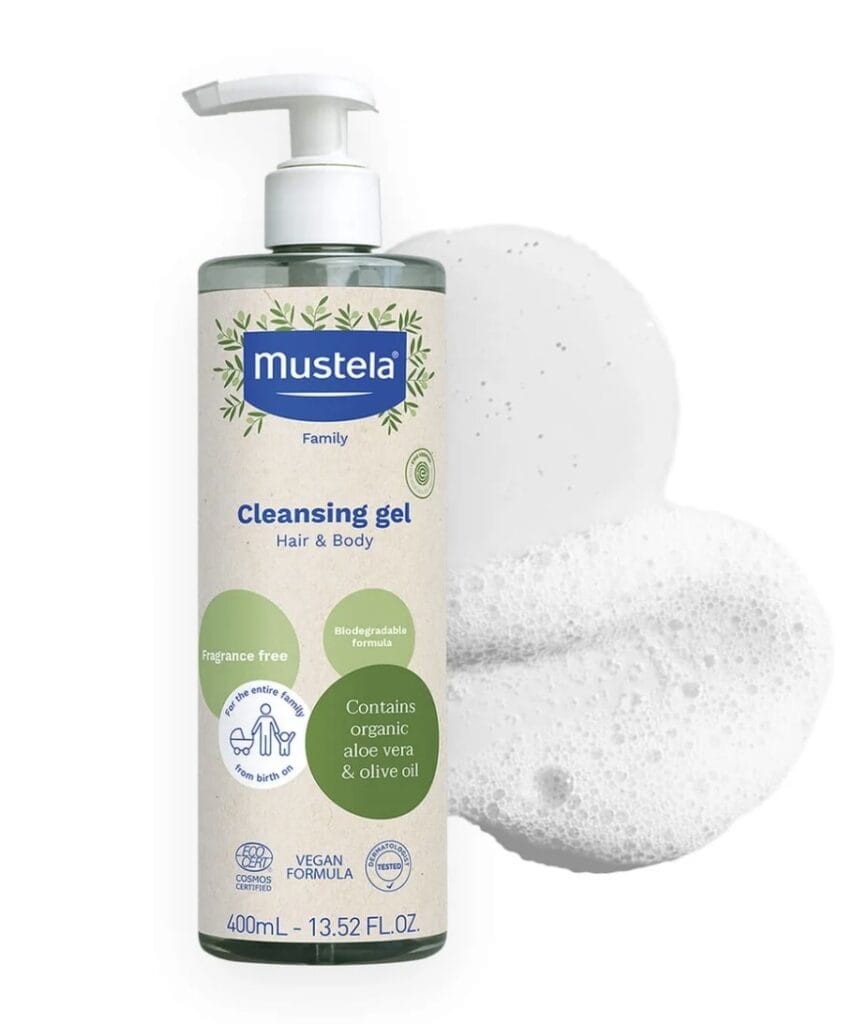
7. Mustela Organic Cleansing Gel: Best Certified Organic Pick
Best for: Parents who want organic certification
Why it made the list
This one is COSMOS Organic certified and EWG Verified, with aloe and olive oil for moisture. It’s fragrance-free, the ingredient list is short, and I didn’t find complaints about eye stinging.
What to watch for
- It contains cocamidopropyl betaine, so it’s not my first pick for eczema-prone babies
- Its ratings come from fewer than 100 reviews on Mustela’s own site
- Heads up: this is not the same as Mustela’s Gentle Shampoo, which contains fragrance and a sulfate cousin
Price:
$20.50 for 13.5 oz, about $1.52 per ounce.
Honorable Mention: Aveeno Baby Cleansing Therapy Moisturizing Wash
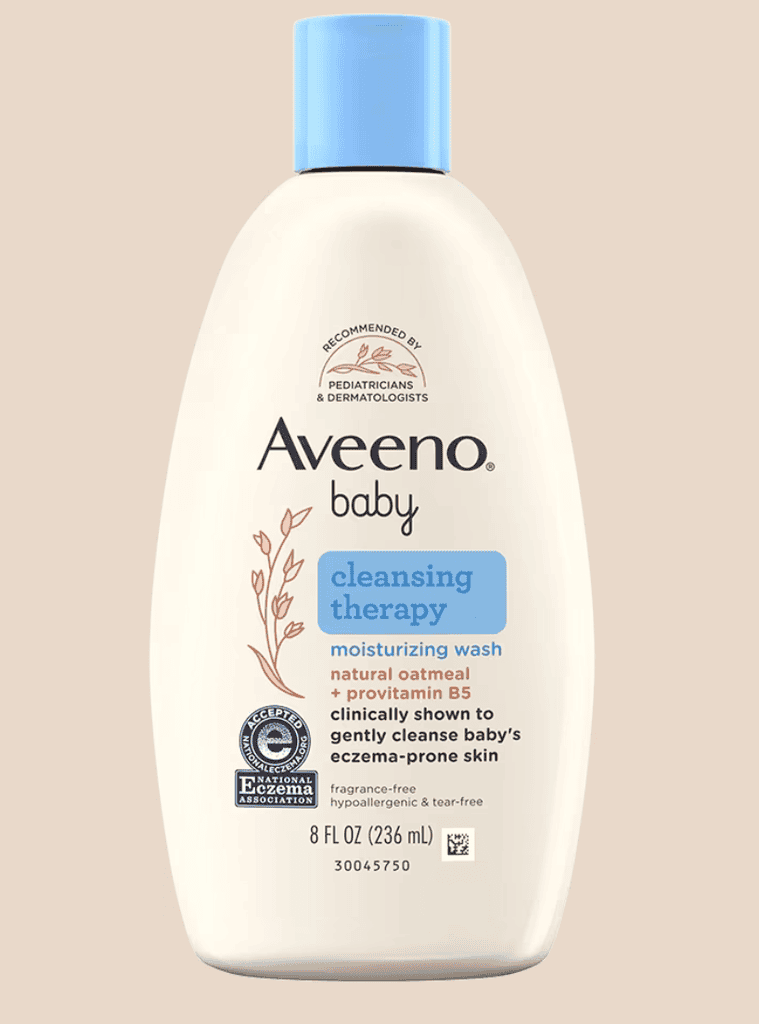
Aveeno’s fragrance-free eczema wash has oat and ceramides and the National Eczema Association Seal. It missed the main list because it contains cocamidopropyl betaine and is sold as a body wash, not a shampoo. Still a solid pick for dry, itchy skin!
Popular Baby Shampoos That Didn’t Make the List (and Why)
You might be wondering about some big names. Here’s the scoop:
- Cetaphil Baby Wash & Shampoo with Calendula: contains sodium laureth sulfate (SLES), a close cousin of SLS, plus fragrance
- ATTITUDE Baby Leaves 2-in-1 (Unscented): its second ingredient is sodium coco-sulfate, which is chemically very close to SLS
- Aquaphor Baby Wash & Shampoo and Mustela Gentle Shampoo: both contain sodium myreth sulfate, another sulfate cousin
- Johnson’s Baby Shampoo: sulfate-free, but it has fragrance, PEGs and cocamidopropyl betaine
- Babo Botanicals Sensitive (Fragrance Free): contains a stronger cleanser (sodium C14-16 olefin sulfonate), cocamidopropyl betaine, calendula and chamomile
- Tubby Todd Hair + Body Wash: parents love it, but even the fragrance-free version has cocamidopropyl betaine, chamomile and lavender extract
- Carina Organics (Unscented): gentle cleansers, but packed with botanicals like chamomile and dandelion
- Badger Baby Foaming Shampoo: soap-based, with chamomile essential oil
Bonus: What’s the Deal with Soap-Based Baby Washes?
Some “natural” baby washes, like Earth Mama, Toups & Co, Badger and Dr. Bronner’s, are made with real soap. On the label, look for words like “saponified,” “cocoate” or “olivate.”
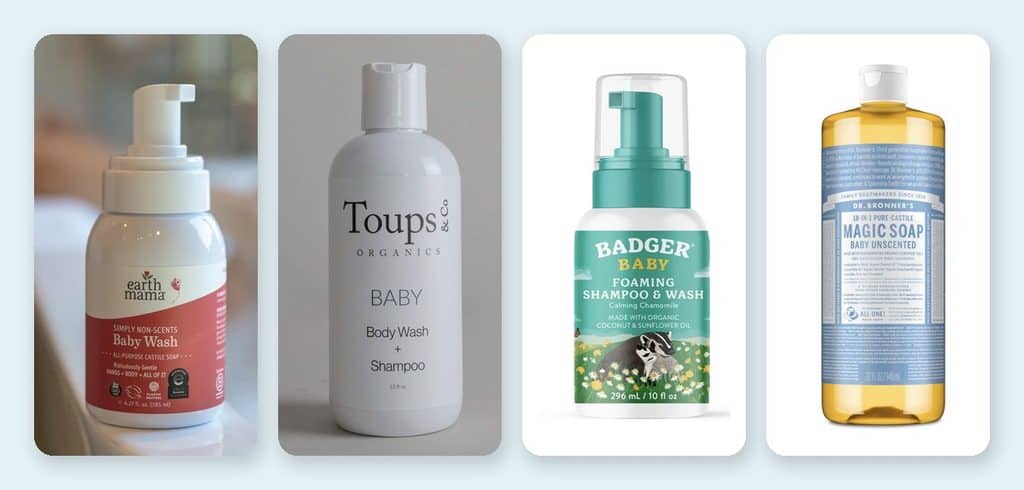
Real soap sounds wholesome (and it’s been around forever!), but it’s alkaline, meaning its pH is much higher than your baby’s skin. The American Academy of Pediatrics recommends neutral-pH cleansers for babies, and that’s why soap-based washes tend to get more complaints about dry skin and stinging eyes. Even Earth Mama says on its own page that its castile wash is “not a no-tear formula.”
If your baby does great with one, no stress! Just know it’s not the gentlest option, especially around those little eyes.
How to shop for non-toxic baby shampoo:
Short answer: Look for a baby shampoo with no sulfates, no fragrance, and a short ingredient list. A National Eczema Association Seal is a bonus. Everything you need is on the back label, not the front.
You’re standing in the baby aisle, half-awake, holding two bottles that both say “gentle,” “natural,” and “tear-free.” One costs $6 and the other costs $20. Which one do you pick?
Here’s the secret nobody tells you: ignore the front of the bottle. Words like “natural,” “clean,” “pure,” and “pediatrician-approved” aren’t regulated. They’re marketing. The ingredient list on the back is what counts.
Don’t panic, I’m not going to make you memorize a chemistry textbook. You only need to check three things.
Quick Checklist: What to Look for in a Baby Shampoo
Next time you’re in that aisle, flip the bottle over and check:
- No sulfates: no SLS, SLES, sodium coco-sulfate, or sodium myreth sulfate
- No fragrance: no “fragrance,” “parfum,” or essential oils
- A short ingredient list: fewer ingredients, fewer chances for irritation
- A bonus seal: the National Eczema Association Seal of Acceptance
- Reviews last: read the complaints for repeated mentions of rashes or stinging
1. Choose a Sulfate-Free Baby Shampoo (Check for SLS and Its Sneaky Cousins)
If any ingredient ends in “sulfate,” put the bottle back. Point blank.
Sulfates are the harsh cleansers that make shampoo super bubbly. They’re also the ones most likely to strip and irritate delicate baby skin. The best-known one is sodium lauryl sulfate (SLS), but it has cousins that go by other names:
- Sodium laureth sulfate (SLES)
- Sodium coco-sulfate
- Sodium myreth sulfate
And yes, some big, trusted, “dermatologist” brands still use them. I was surprised too.
2. Pick a Fragrance-Free Baby Shampoo (Yes, Even “Natural” Scents)
Fragrance is one of the most common causes of skin reactions in babies, and “natural” scents and essential oils count too.
This is the hard one, because baby shampoo that smells like lavender is just so dreamy. But if you see “fragrance,” “parfum,” or an oil you’d recognize as a scent, like lavender or tea tree, keep scrolling. Your baby already smells amazing all on their own. (That newborn head smell? Unbeatable.)
3 Look for a Short Ingredient List and the EWG Verified or National Eczema Association Seal
Fewer ingredients means fewer chances for something to bother your baby’s skin. So go ahead and count them.
EWG Verified means a product meets the Environmental Working Group’s standards for ingredient screening and transparency. There’s more behind it than a brand simply putting “clean” on the bottle.
National Eczema Association (NEA) Seal of Acceptance means the product is fragrance-free and has been screened for known irritants. It’s the one certification I actually trust for sensitive skin.
4. Baby Shampoo Ingredients to Watch for Eczema and Sensitive Skin
These aren’t bad for most babies. But if your little one has eczema or touchy skin, these are worth a second look:
- Cocamidopropyl betaine, a common cleanser that some people are allergic to
- Calendula and chamomile, which are in the daisy family and can bother sensitive skin
- Nut oils, like sweet almond oil
- PEG ingredients (anything with “PEG” in the name)
5. How to Read Baby Shampoo Reviews (Hint: Skip the 5-Star Ones)
Use reviews as a tiebreaker, not a starting point. Most baby shampoos sit somewhere around 4.5 to 4.8 stars, so the star rating doesn’t tell you much.
Here’s where so many of us go wrong, me included. We read the reviews first. Instead, skip past the “love it!!” reviews and read the complaints. Are people mentioning rashes? Stinging eyes? Dry, flaky skin? If the same complaint keeps showing up, that tells you something.
Baby Shampoo FAQs:
Is Johnson’s Baby Shampoo Safe?
Johnson’s Baby Shampoo is considered safe for most babies, but it isn’t the gentlest choice for sensitive skin. The current formula is sulfate-free, and Johnson & Johnson removed formaldehyde-releasing preservatives years ago. But it still contains fragrance, cocamidopropyl betaine (a cleanser some people are allergic to) and PEG ingredients. If your baby has eczema or reacts easily, a fragrance-free option with a shorter ingredient list is a better bet.
Are all baby shampoos sulfate-free?
Not always, so check the label. Lots of baby shampoos are sulfate-free now, but some still use sodium laureth sulfate or its cousins: sodium coco-sulfate and sodium myreth sulfate. And yes, that includes a few big-name brands. If any ingredient ends in “sulfate,” put it back.
How often should you wash your baby’s hair?
The American Academy of Pediatrics recommends washing your baby’s hair two to three times a week in the first year. More than that can dry out their scalp. Newborns don’t really need shampoo at all, since warm water and a soft washcloth are plenty. Less shampoo, less fuss, more snuggles.
Does baby shampoo expire?
Yes. Most baby shampoos are best used within about one to three years, and sooner once opened. Look for a tiny open-jar symbol with a number like “12M” on the bottle. That’s how many months it’s good for after opening. If the color, smell or texture changes, toss it.
Can adults use baby shampoo?
Yes! My husband always steals the Dabble and Dollop’s Lullaby Lather™ Hair & Body Wash from my babies. He loves it.
If Baby shampoo is gentle enough for babies, it’s gentle for anyone, and plenty of grown-ups with sensitive scalps love it. Just know it may not cut through oily hair or product buildup as well as an adult shampoo.
How did people wash babies before shampoo was invented?
This was a question for me! So I did some history homework.
For most of history, babies were washed with plain warm water, and often rubbed with oil. Soap existed for thousands of years, but early soaps were mostly for laundry, not bodies. In many cultures, including parts of India and the Mediterranean, babies were massaged with oils like olive, mustard or coconut oil, and some families still do this today. Soap didn’t become a regular personal hygiene product until the late 1800s, and Johnson’s “No More Tears” baby shampoo arrived in 1953.
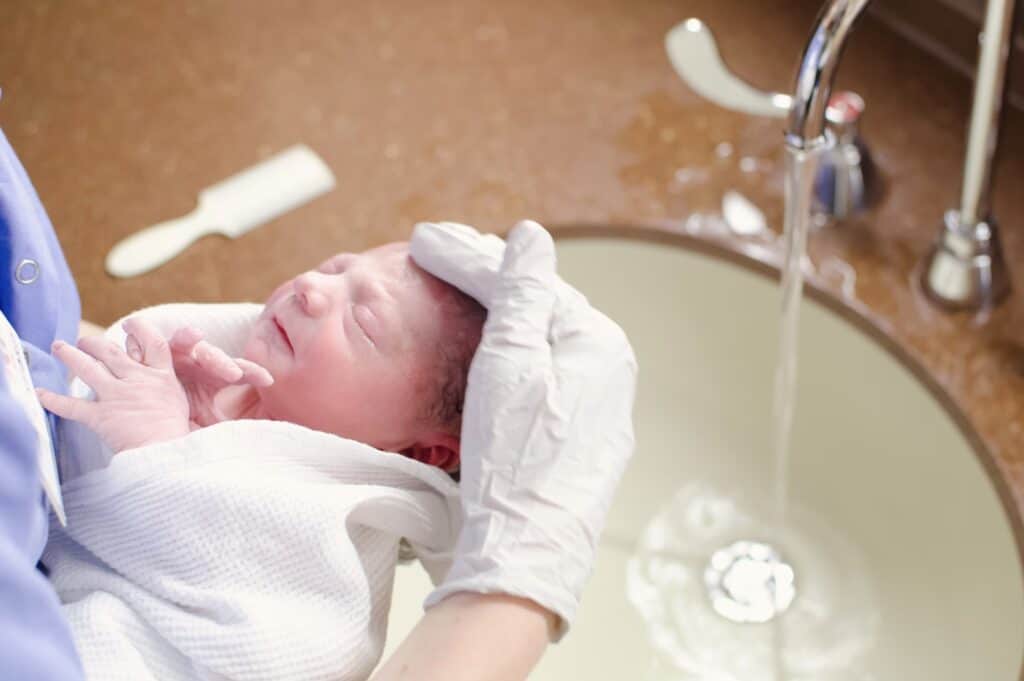
Fun fact: the word “shampoo” comes from the Hindi word chāmpo, meaning “to press” or “to massage.” So the next time you’re juggling a squirmy baby and a slippery bottle, remember that generations of parents got by with warm water, a little oil and a whole lot of love.
Do babies need shampoo or body wash at all?
You should already have the answer if you have read my previous question.
Not always. Plain warm water is enough for most baths, especially in the first few weeks. Newborns don’t get very dirty, and their skin is still settling in, so a soft washcloth and warm water do the job. As your baby gets older (and messier), a small amount of mild, fragrance-free cleanser helps with spit-up, drool, diaper blowouts and food in the hair. The American Academy of Pediatrics recommends using cleanser sparingly and only where it’s needed. So think of shampoo and body wash as helpers, not must-haves.
Do I need separate baby shampoo and baby wash?
No, one gentle “head-to-toe” or 2-in-1 baby wash works for both hair and body. Most baby shampoos and baby washes use very similar mild cleansers, so separate bottles aren’t necessary. Plus a lot of babies are not even born with hair!
A separate shampoo can be nice if your little one has thick hair or cradle cap, but it isn’t a must. That’s one less bottle to juggle with a slippery baby in one arm. My kids are out of the baby phase now. We are still using the 2-in-1 wash for them.
Common Baby Shampoo Ingredients, Explained: What’s in a Gentle Baby Wash
You can skip part if you don’t want to bore yourself.
I was curious what exactly they put in the baby shampoos (baby wash). So I dug a little deeper.
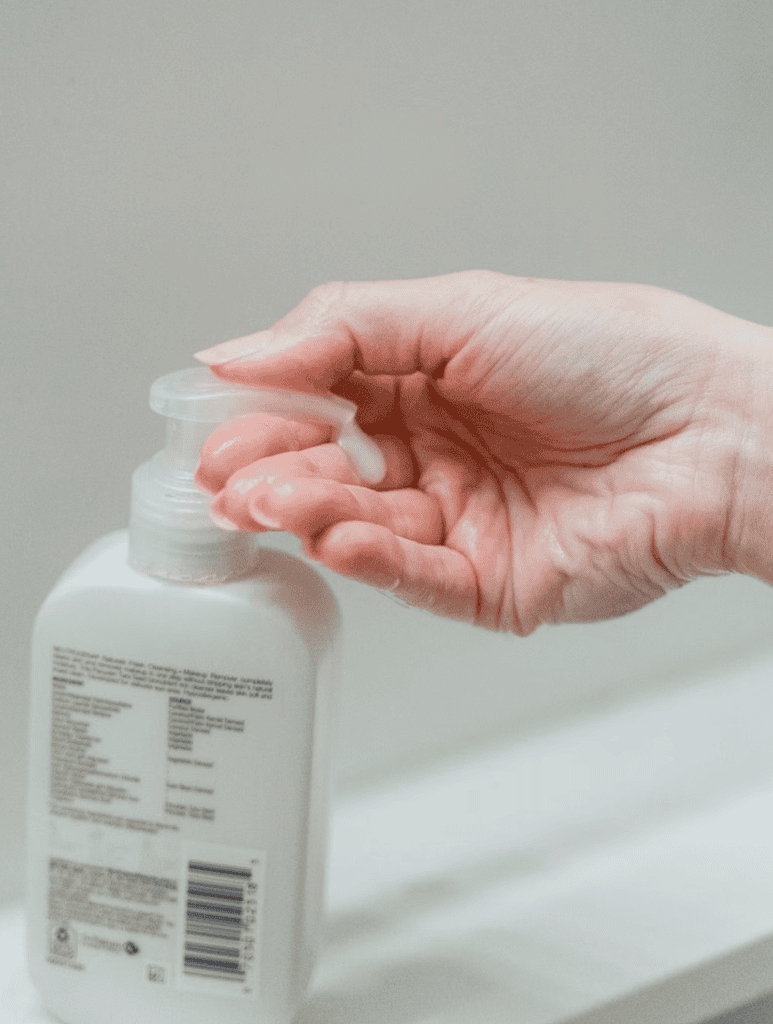
I found most gentle, non-toxic baby shampoos and washes are built from the same few types of ingredients: mild cleansers, moisturizers, a thickener, a gentle preservative and a pH balancer.
Once you know them, those long, scary-looking labels get a whole lot less scary.
Here’s your cheat sheet. Every formula is a little different, but you’ll see these names over and over.
Cleansers
These replace harsh sulfates. Most come from coconut oil, sugar or amino acids, and they make fewer bubbles, which is a good thing.
- Coco-glucoside, decyl glucoside and lauryl glucoside: Some of the gentlest cleansers around, made from coconut or other plant oils plus sugar. You’ll find at least one in most “clean” baby washes.
- Sodium cocoyl glutamate and disodium cocoyl glutamate: Mild cleansers made from coconut oil and an amino acid (a building block of protein). They’re super gentle and common in dermatologist brands.
- Coco-betaine: A mild, coconut-derived cleanser that adds a little foam. Not to be confused with its cousin, cocamidopropyl betaine.
- Sodium cocoyl isethionate: A creamy, gentle cleanser from coconut oil that gives a soft, low-sting lather.
- Sodium lauroyl lactylate: A mild cleanser that also helps soften skin.
- Sodium methyl cocoyl taurate: A gentle, coconut-based cleanser that rinses clean.
- Sodium laurylglucosides hydroxypropylsulfonate: Don’t let the name fool you! Even with “lauryl” and “sulf” in there, it is not SLS. It’s a mild, sugar-based cleanser.
Moisturizers (to Keep That Baby Skin Soft)
Cleansers wash away a little natural oil, so these help put moisture back.
- Glycerin: A classic moisturizer that pulls water into the skin. It’s in almost every baby wash, and for good reason.
- Squalane: A lightweight oil, often from olives or sugarcane, that mimics skin’s natural oils.
- Ceramides: Fats that are naturally part of the skin barrier. They’re especially helpful for dry or eczema-prone skin.
- Colloidal oatmeal (Avena sativa): Finely ground oats that soothe dry, itchy skin. Rarely, babies with an oat allergy can react to it.
- Aloe vera (Aloe barbadensis leaf juice): A soothing plant juice that adds a little moisture.
- Sunflower seed oil: A gentle plant oil that helps support the skin barrier.
Thickeners (So It Doesn’t Run Through Your Fingers)
- Guar gum and xanthan gum: Natural thickeners made from beans and fermented sugar. They give the wash a nicer texture and are very gentle.
Gentle Preservatives (Yes, You Want These)
Any product made with water needs a preservative. Otherwise bacteria and mold can grow in the bottle, and that’s way worse for your baby than any preservative.
- Sodium benzoate and potassium sorbate: Common, food-grade preservatives, the same ones found in many foods and drinks.
- Gluconolactone: A gentle, sugar-derived acid that’s often paired with sodium benzoate to keep products fresh. It helps hold in moisture, too.
- Caprylyl glycol, 1,2-hexanediol and ethylhexylglycerin: Mild ingredients that help preservatives work and add a bit of moisture.
pH Balancers (the Behind-the-Scenes Helpers)
- Citric acid: The same acid found in lemons, used in a tiny amount to bring the formula closer to skin’s natural, slightly acidic pH. Totally harmless.
Gentle-but-Watch Ingredients for Sensitive or Eczema-Prone Babies
These are common in “clean” baby products, and most babies do just fine with them. But if your little one has eczema or reacts easily, keep an eye out:
- Cocamidopropyl betaine and cocamidopropyl hydroxysultaine: Mild cleansers that can trigger allergies in a small number of people.
- Chamomile (Anthemis nobilis or Chamomilla recutita) and calendula: Soothing botanicals from the daisy family, the same family as ragweed.
- Nut oils, like sweet almond oil: Lovely moisturizers, but best skipped if nut allergies run in your family.
Point blank: a label full of long chemical-sounding names isn’t automatically bad. Some of the gentlest ingredients have the longest names. Stick to your three checks (no sulfates, no fragrance, short list), and use this cheat sheet when a name stumps you.
The Bottom Line on Choosing a Safe, Gentle Baby Shampoo
That’s it. I know it’s overwhelming.
To keep it simple. The best baby shampoo is a sulfate-free, fragrance-free formula with a short ingredient list. If it has the National Eczema Association Seal, even better. That’s really all there is to it.
So the next time you’re standing in that baby aisle, sleep-deprived and staring at a wall of bottles that all promise to be “gentle,” “natural” and “pure,” take a breath. Skip the front of the bottle, flip it over and run through your three checks:
- No sulfates: nothing ending in “sulfate”
- No fragrance: no “fragrance,” “parfum” or essential oils
- A short ingredient list: fewer ingredients, fewer chances for irritation
And remember, there’s no rush, either. Plain water is generally enough during those first few weeks;
Now go enjoy that fresh, clean baby smell. It’s the best part of bath time anyway.